We earn a commission if you buy through our links, at no extra cost to you.
Best Stand Mixer for Beginners: What to Look For
Buying your first stand mixer? Learn how bowl size, tilt-head design, counter space and included tools matter, then see four beginner-friendly options.
At a glance
For a first stand mixer, choose a tilt-head with a 4- to 5.5-quart bowl. The KitchenAid Artisan 5-Quart is the all-rounder, and the KitchenAid Artisan Mini suits small kitchens. The Cuisinart Precision Master adds a larger bowl and 12 speeds, and the Hamilton Beach 4-Quart is a basic starter for light batters.
A first stand mixer is a bigger decision than it looks. It takes up counter space, it is heavy, and there are dozens of models that look alike. The good news is that a beginner does not need the most powerful or most feature-packed machine. You need one that fits your kitchen, handles the recipes you actually make and is easy to use every week instead of ending up in a cabinet. This guide explains what matters on a first mixer, then picks four from our lineup. To compare all eight mixers we cover, see our best stand mixers of 2026 ranking.
We do not run our own kitchen trials. Specs and findings come from the maker pages and buying guides we opened, and where Bon Appétit or CNET ran their own testing, we credit them by name.
Start With the Shape: Tilt-Head
Mixers come in two designs. On a tilt-head, the top hinges back so you can lift the beater out, add ingredients and lift or twist the bowl off. Bon Appétit says some users find this the more convenient design, and that these mixers are usually more compact, which makes them better for small spaces and for storing in a cabinet. They also usually have less powerful motors, so they cost less.
A bowl-lift keeps the head fixed and uses a lever to raise the bowl. It has a larger capacity and usually a stronger motor, and Bon Appétit calls it the heavy-duty option for large and heavy recipes. For a beginner who bakes cakes, cookies, frosting and the occasional loaf of bread, a tilt-head is the easier first step. If you already know you will knead bread several times a week, our bread dough guide looks at bowl-lifts instead.
Bowl Size and Counter Space
Bowl size is the next choice. CNET says most mixers have bowls between 4 and 6 quarts. Smaller models have 3- to 4-quart bowls, which CNET says are still big enough for typical cookie and cake recipes but may feel cramped for extra-large batches or some bread recipes. Bon Appétit puts it simply: in its testing a 5-quart bowl was best, large enough for all the cookie dough a home baker could want to make in one batch (nine dozen or so) but not so large that it is inconvenient for smaller tasks.
Then think about space. CNET says most models stand about 14 to 15 inches tall and need another inch or two of clearance to tilt the head back, so check your overhead cabinets. If the mixer will live on the counter, color and looks matter too. If it will live in a cabinet, weight matters: Bon Appétit says the Mini is five pounds lighter than the 5-quart model, so it is easier to lift and store.
What Comes in the Box
Most mixers include a bowl, a flat beater, a wire whisk and a dough hook. Many also have a pouring shield or splash guard. A beginner does not need more. Extras that do help include a beater with a flexible edge that scrapes the bowl as it mixes, a second bowl and a built-in light, though these usually add cost. Bon Appétit also values a mixer that has an attachment hub, because the same machine can later become a pasta maker, meat grinder or ice cream maker if you buy the attachments. It is a nice option, not a requirement.
Ease of Use
Pay attention to how simple the mixer is to operate. Bon Appétit looks for mixers where the speed is easy to adjust, the bowl is easy to lock in place and the tilt or lift mechanism is easy to use. Look for a clear speed control, parts you can put in the dishwasher and a bowl that comes off without a fight. A mixer that is a pleasure to use gets used.
Four Beginner-Friendly Stand Mixers
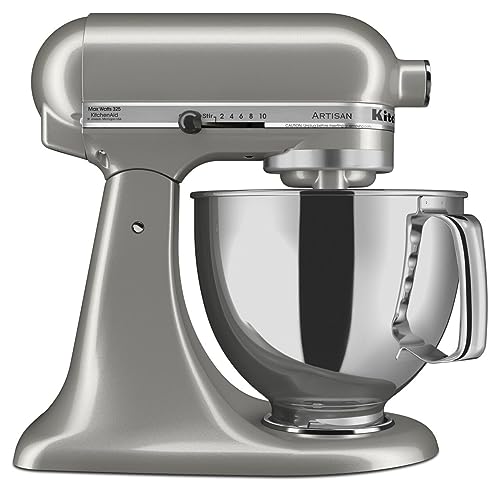
KitchenAid Artisan 5-Quart
The classic tilt-head all-rounder: a 5-quart bowl, 10 speeds and an attachment hub for later add-ons. A safe first mixer if you have the counter space.
Bon Appétit calls the Artisan a classic that was a long-standing favorite until the newer Artisan Plus took the top spot. It says the Artisan performed nearly as well as the new model, comes in more colors, and can handle any baking task. It has 10 speeds, and it lacks the Plus’s precision speed control and bowl light and does not include a flex edge beater, though you can buy one separately. See our KitchenAid Artisan 5-Quart profile.
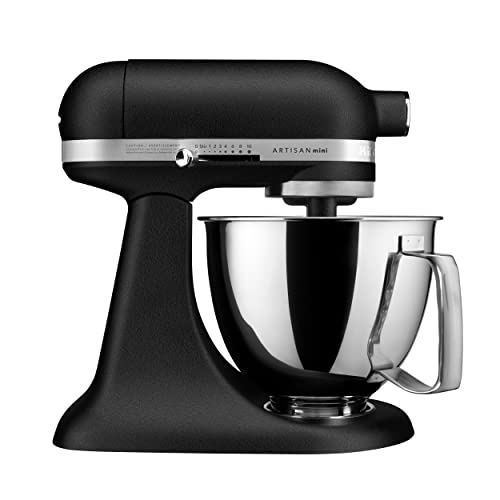
KitchenAid Artisan Mini
A 3.5-quart tilt-head for small kitchens and small batches. It keeps the KitchenAid attachment hub in a lighter, more compact body.
According to Bon Appétit, the Mini has a 3.5-quart bowl, 10 speeds and a 250-watt motor, measures 12.3 by 7.8 by 12.3 inches and weighs 18 pounds. It excelled at a small-batch cake batter, kneaded a two-loaf batch of challah and is compatible with the same hub attachments as the full-size model. The trade-offs: it whips cream a bit slower, it will not handle larger doughs and it has no light or timer. Bon Appétit says it is only worth choosing over the 5-quart if space is a real concern. More in the KitchenAid Artisan Mini profile.
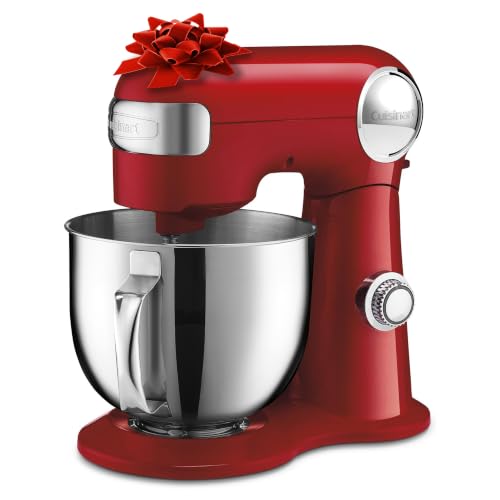
Cuisinart Precision Master
A 5.5-quart tilt-head with 12 speeds and a speed dial, for beginners who want a big bowl and a recognized brand outside the KitchenAid line.
CNET picked the SM-50 as its best stand mixer under $250. According to CNET, it has a 5.5-quart bowl, a 500-watt motor and 12 speeds, weighs 20 pounds and comes with a paddle, whisk, dough hook and pouring shield, with 12 optional attachments. CNET praises the speed dial for finer control than levers. Bon Appétit was less impressed with it for dough: the dough hook struggled to reach the edges of the bowl, leaving floury bits in challah dough. For cakes, cookies and frosting, that is less of a concern. Read the Cuisinart Precision Master profile.
Hamilton Beach 4-Quart
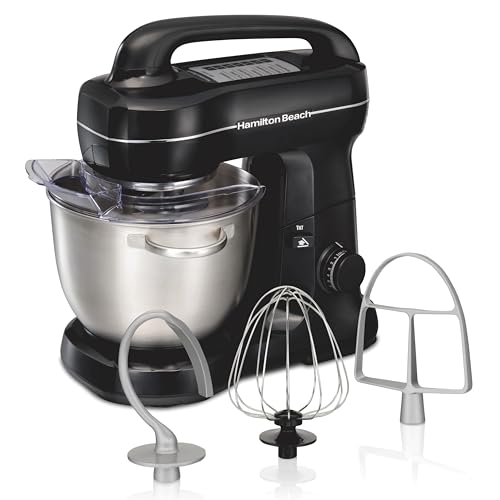
A simple starter with 7 speeds, a splash guard and a carry handle. Best for light batters and small batches rather than heavy dough.
Hamilton Beach says this mixer has 7 speeds, a mixing guide, a built-in handle, a tilt-back head and a 4-quart stainless steel bowl with handles. It comes with a splash guard, dough hook, whisk and flat beater, all dishwasher safe. The maker says its planetary mixing action rotates the beaters around the bowl so you do not have to scrape the sides. Bon Appétit tried a Hamilton Beach 4-quart electric stand mixer (it gives no model number) and says it worked fine but did not wow, since the placement of the motor head made it hard to add ingredients without tilting it up and the 4-quart bowl was too small. Treat it as a starter for light jobs. See the Hamilton Beach 4-Quart profile.
Which Beginner Mixer Fits You?
- Most home bakers: the KitchenAid Artisan 5-Quart, for the all-round balance and the wide range of attachments.
- Small kitchen or small households: the Artisan Mini, for its footprint and light weight.
- Larger bowl and more speeds: the Cuisinart Precision Master, if you mostly bake cakes and cookies.
- Simplest: the Hamilton Beach 4-Quart, if you want a basic mixer for light batters.
First Weeks With Your Mixer
Read the manual before the first batch. Start on the lowest speed and bring it up gradually so flour does not fly out. Use the pouring shield if you have one, and stop to scrape the bowl once or twice. Use the flat beater for batters and cookie dough, the whisk for cream and egg whites and the dough hook for bread. If you plan to knead dough, keep batches small and follow the manual’s guidance on speed and run time.
Sources
Frequently asked questions
What size stand mixer should a beginner buy?
Bon Appétit says a 5-quart bowl worked best in its own testing: large enough for about nine dozen cookies in one batch, but not so large that small jobs become awkward. If you bake for one or two people or have little space, a 3.5-quart model such as the KitchenAid Artisan Mini handles small batches well, per Bon Appétit.
Is a tilt-head or a bowl-lift easier for a first mixer?
Tilt-head. Bon Appétit says you simply tilt the head back to add ingredients, and these mixers are usually more compact and easier to store. Bowl-lifts are the heavy-duty option and are mainly worth it if you plan to knead bread often.
Do I need a lot of attachments?
No. Most mixers come with a flat beater, a dough hook and a wire whisk, and many include a pouring shield. KitchenAid and Cuisinart mixers also have an attachment hub for a pasta roller, meat grinder or ice cream maker, but those are optional extras sold separately.
Can a beginner mixer knead bread dough?
Smaller mixers can handle a loaf or two. Bon Appétit says the Mini kneaded a two-loaf batch of challah without trouble, and also says one popular 5-quart tilt-head bobbed slightly under challah dough. For frequent bread baking, see our guide to the best stand mixer for bread dough.
Is a stand mixer worth it over a hand mixer?
It depends on what you bake. Bon Appétit says that if you often knead bread, make big batches of whipped cream or whip egg whites for meringue, a stand mixer makes the job much easier. For an occasional batch of cookies, a hand mixer may be enough.
What should I check before I click buy?
Measure your counter and the space under your cabinets. CNET notes that most mixers are 14 to 15 inches tall and need another inch or two of clearance to tilt the head back. Then check the bowl size, the speeds and what is included in the box.